

Kilograms to Pounds converter
In our interconnected world, navigating different systems of measurement is an essential skill. One of the most common points of confusion arises when converting between the metric system and the U.S. customary system for measuring mass. While most of the world uses kilograms (kg), many countries, including the United States, still rely on pounds (lb) for everything from body weight to grocery shopping.
This comprehensive guide will demystify the process of converting kilograms to pounds. We will explore the core conversion factors, provide easy-to-follow methods for both quick estimates and precise calculations, and even show you how to break down your results into pounds and ounces. By the end, you’ll be able to confidently convert between these units in any situation.
The Core Relationship: The Foundation of Conversion
All conversions are built on a single, foundational truth: the exact relationship between the units. The modern definition of a pound (specifically, the avoirdupois pound) is tied directly to the kilogram.
The international standard for mass defines:
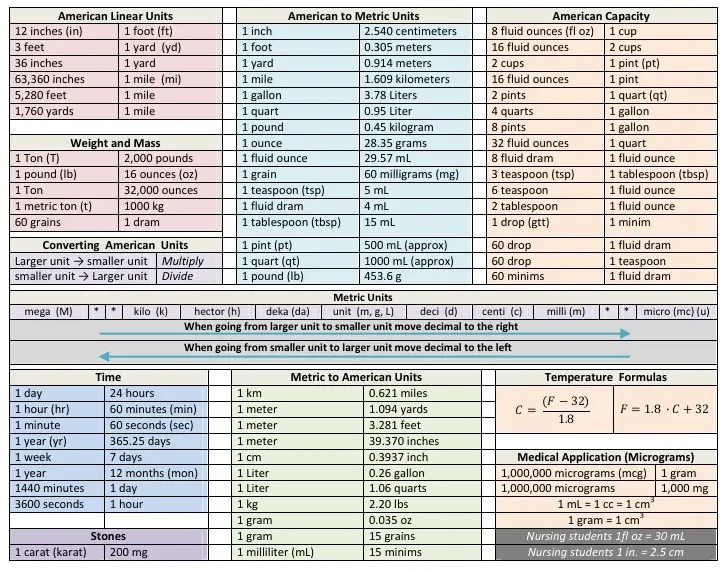
$$1 \text{ pound (lb)} = \textbf{0.45359237} \text{ kilograms (kg)}$$
This is the most precise and accurate conversion factor. From this single definition, we can derive the conversion factor for going from kilograms to pounds. To find out how many pounds are in one kilogram, we simply divide 1 by the exact conversion factor:
$$1 \text{ kg} = \frac{1}{0.45359237} \text{ lb} \approx \textbf{2.20462} \text{ lb}$$
For everyday purposes, this number is often rounded to three decimal places, giving us the most commonly used conversion factor: 2.205.
Two Methods for Conversion: Precision vs. Approximation
There are two primary ways to convert kilograms to pounds, each with its own advantages.
Method 1: The Quick & Easy Multiplication
This is the most direct and intuitive method for a quick conversion. It uses the rounded conversion factor of 2.205, which is more than accurate enough for most situations.
The Formula:
$$\text{Pounds (lb)} = \text{Kilograms (kg)} \times 2.205$$How it Works:
To convert a mass in kilograms to pounds, simply multiply the kilogram value by 2.205.For example, to convert a 5 kg bag of flour:
$5 \text{ kg} \times 2.205 = 11.025 \text{ lb}$So, a 5 kg bag is approximately 11.03 pounds.
Method 2: The Exact Division
For situations that require a higher degree of precision, such as scientific or engineering applications, it’s best to use the exact definition of the pound and perform a division.
The Formula:
$$\text{Pounds (lb)} = \frac{\text{Kilograms (kg)}}{0.45359237}$$How it Works:
To convert a mass in kilograms to pounds, divide the kilogram value by the exact conversion factor.Example: Converting 70 kg to Pounds
Let’s say you weigh 70 kg and need to find your weight in pounds for a form.$$70 \text{ kg} \div 0.45359237 = 154.32358 \text{ lb}$$
The result is 154.32 pounds. This method gives you a highly precise number, avoiding any rounding errors from the conversion factor itself.
The Two-Part Conversion: Kilograms to Pounds and Ounces
While decimal pounds are convenient for calculations, most people express their weight in both pounds and ounces. There are exactly 16 avoirdupois ounces (oz) in one pound. To convert a precise decimal pound value into pounds and ounces, you must perform a simple secondary calculation.
Let’s continue with our example of 70 kg, which we calculated as 154.32 pounds.
Step 1: The whole number of your result is the number of pounds. In this case, that’s 154 pounds.
Step 2: Take the decimal portion of the result, which is 0.32358.
Step 3: Multiply that decimal by 16 to find the number of ounces.
$$0.32358 \times 16 = 5.17728 \text{ oz}$$Step 4: Combine the two results.
The final conversion of 70 kg is 154 pounds and approximately 5.18 ounces.
This is why tools that convert kilograms directly to pounds and ounces are so useful; they perform this two-step calculation for you, saving you the hassle of manual conversion.
A Quick & Dirty Conversion Factor: The “Double and Add 10%” Trick
For moments when you don’t have a calculator handy, there’s a simple mental math trick for converting kilograms to pounds that yields a surprisingly accurate approximation.
The Trick: Double the number of kilograms and then add 10% of that doubled number to the result.
Example: 70 kg to Pounds (The Mental Math Way)
Double the number: $70 \times 2 = 140$
Find 10% of the doubled number: $140 \times 0.10 = 14$
Add them together: $140 + 14 = 154$
The result is 154 pounds. Compare this to our precise result of 154.32 pounds. The difference is negligible for most day-to-day purposes, making this trick a great way to quickly check a number or get a feel for a measurement.
The Smaller Units: Converting Between Grams and Ounces
The conversation between kilograms and pounds often involves their smaller counterparts: grams and ounces. The relationship between these two units is also fixed and derived from the same foundational definitions.
We know that $1 \text{ lb} = 0.45359237 \text{ kg}$.
And we know that $1 \text{ kg} = 1000 \text{ grams (g)}$.
Therefore, $1 \text{ lb} = 453.59237 \text{ g}$.
Since there are exactly 16 ounces in a pound, we can find the conversion factor between ounces and grams:
$$\frac{453.59237 \text{ g}}{16 \text{ oz}} = 28.3495 \text{ g/oz}$$
This means 1 ounce is approximately 28.35 grams.
Conversion Formulas for Grams and Ounces:
Grams to Ounces: $\text{Ounces (oz)} = \text{Grams (g)} \div 28.35$
Ounces to Grams: $\text{Grams (g)} = \text{Ounces (oz)} \times 28.35$
Unit Definitions and Context
Understanding the origin and use of these units provides valuable context for why the conversions exist in the first place.
The Kilogram (kg)
The kilogram is the base unit of mass in the International System of Units (SI), which is the modern metric system. For over a century, the kilogram was defined by a physical artifact—a cylinder made of platinum-iridium alloy stored in France. However, in 2019, its definition was fundamentally changed to be based on a fixed value of the Planck constant, a fundamental constant of nature. This makes the kilogram’s definition perfectly stable, universal, and immune to any physical changes. Today, the kilogram is the most widely used unit of mass for science, industry, and a majority of the world’s population.
The Pound (lb)
The pound is a unit of mass used in the British imperial system of units and the United States customary units. The pound’s history is long and complex, with many different historical definitions. The modern pound, known as the avoirdupois pound, is a part of a coherent system where it is precisely defined as 0.45359237 kilograms. Pounds and ounces are still deeply ingrained in the culture of a few nations, used for everyday weighing of body weight, groceries, and commercial goods.
Conclusion
Converting between kilograms and pounds is a crucial skill in a globalized world. Whether you need a quick mental estimate or a precise, multi-unit calculation, understanding the core relationships and formulas empowers you to get the job done right.
By mastering the simple multiplication or division methods and knowing how to break down results into pounds and ounces, you’ll never again be confused by a weight measurement. From a gym class in Europe to a recipe in America, your understanding of these units will allow you to navigate any situation with confidence.
