
CPA | AUD 4 Performing Further Procedures Flowchart
Audit Transaction cycles
Audits are generally performed by transaction cycle. The most common transaction cycles are listed in the chart and will be covered in the first six modules of this article.Auditing by transactions cycle enables the auditor to gather evdience for related accounts , transactions,and disclousres simulataneously.This makes the audit process more efficient.
Revenues
Auditing by transaction cycles is a structured approach where auditors group related business activities into logical sequences, each tied to specific financial statement accounts. This method allows auditors to test controls and gather evidence for multiple accounts at once, rather than examining them individually.
Expenditure
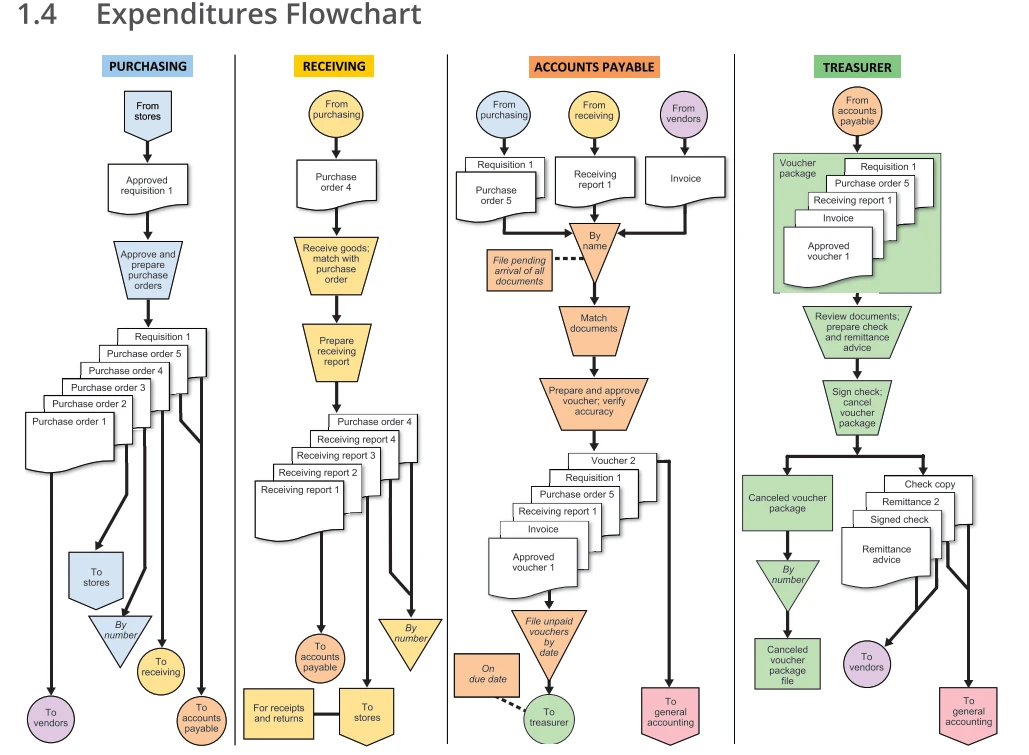
The expenditure cycle (also called the purchasing or disbursement cycle) covers all activities related to acquiring goods, services, and assets, and making payments for them. It typically includes purchases transactions (ordering, receiving, and recording goods/services) and cash disbursements (paying suppliers, employees, or other entities)
Key Activities in the Expenditure Cycle:
Purchase requisition – Request for goods/services.
Purchase order (PO) – Formal order to a supplier.
Receiving goods/services – Verification of delivery.
Recording accounts payable – Creating liability for goods/services received.
Cash disbursement – Payment to suppliers or other payees.
Vendor/payee communication – Confirming delivery and payment terms
Cash
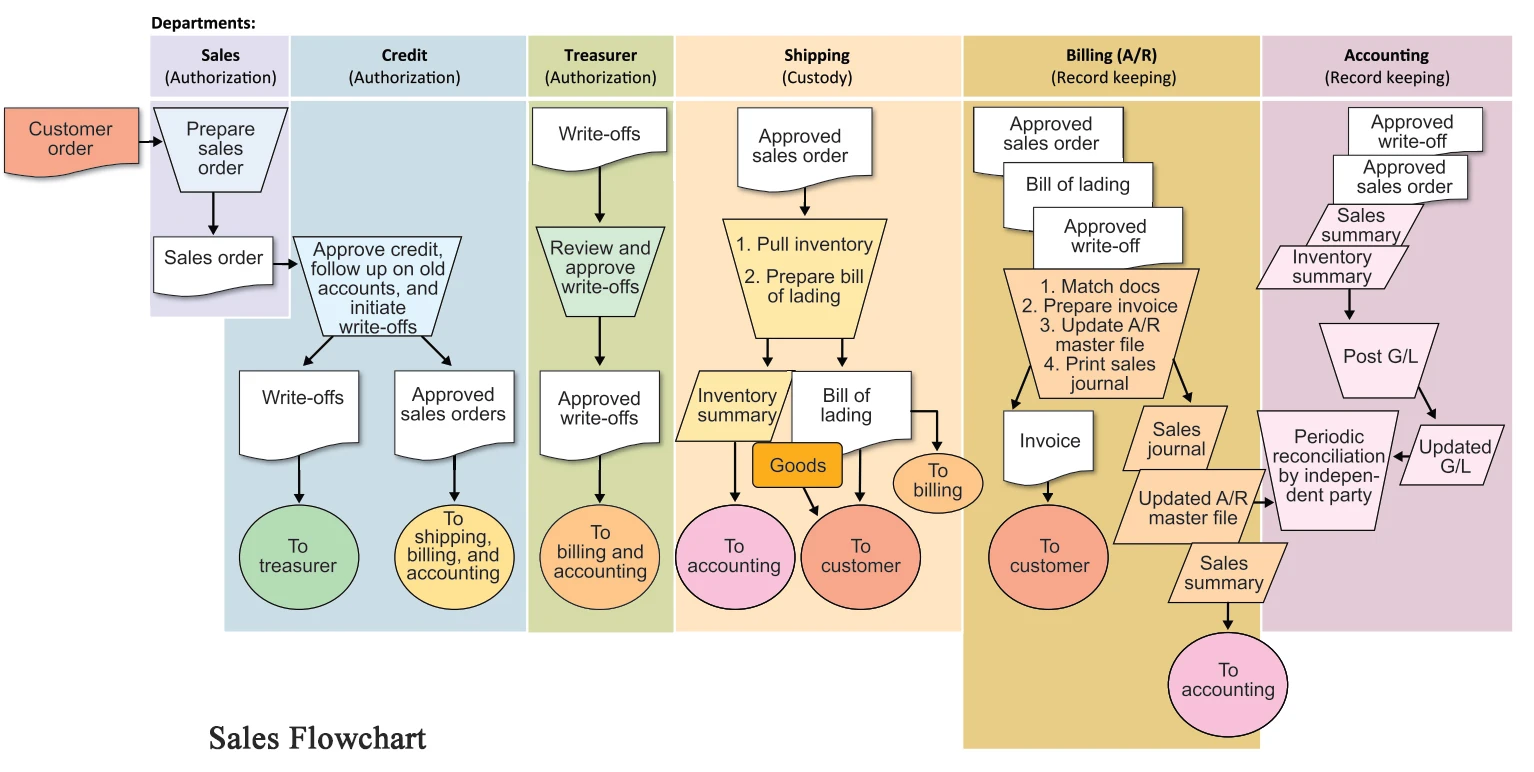
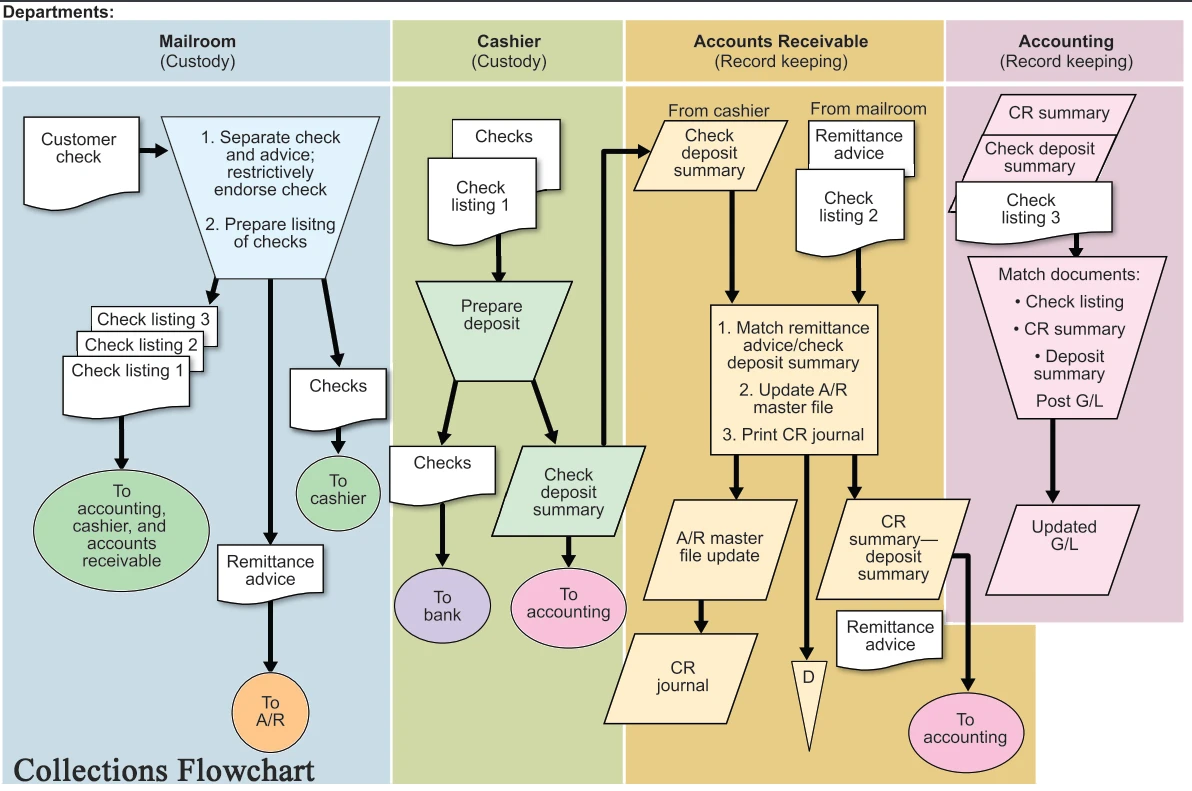
The cash transaction cycle is a core part of the revenue and collection cycle in auditing, covering the process from a customer’s order through to the final receipt of cash legalc. It ensures that cash inflows are accurately recorded, safeguarded, and properly matched to related revenue and receivables.
Key Activities in the Cash Transaction Cycle
Customer Order – Initiated via phone, email, fax, or EDI; documented in a prenumbered sales order cpa.theadvancedapp.com.
Credit Approval – Independent of sales to verify the customer’s ability to pay
Shipping – Goods dispatched with a shipping document; triggers billing
Billing – Sales invoice issued, creating Accounts Receivable
Cash Collection – Customer remittance advice accompanies payment; cash receipts recorded
Sales Returns/Allowances – Refunds or credits processed with supporting documentation
Write-offs – Uncollectible accounts reviewed and approved for write-off
Inventory
Controls over inventory purchase and sales were covered in the sections on the revenue cycle and the expenditure cycle.For inventory held by the entity, a proper system of internal control includes adequate safeguadig of inventory and proper segregation of duties.
Investments
In auditing, transaction cycles group related business activities into logical flows, allowing auditors to test controls and gather evidence efficiently. The Finance and Investment Cycle is one of the five major cycles, covering how an entity raises capital and makes strategic investments
What the Investment Cycle Covers
The investment cycle deals with:
Acquisition of long-term assets (property, plant, and equipment)
Strategic investments (marketable securities, loans, joint ventures)
Disposal of assets (sales, write-offs)
Cash flows from investing activities (e.g., interest/dividend income, capital expenditures)
These transactions affect non-current assets and long-term liabilities on the balance sheet, and often involve large, infrequent, and material cash inflows or outflows
Key Accounts Affected
Non-current assets (e.g., land, buildings, machinery, investments)
Long-term debt (e.g., loans, bonds)
Equity investments (e.g., shares, securities)
Cash and cash equivalents (investing inflows/outflows)