
Top 7 considerations when choosing a pump for your medical device:
Newcomers to medical device design may think pressure and flow rate are sufficient parameters when selecting a pump. While this may be true in some industrial applications, medical device requirements are more demanding. A thorough review of the selection criteria for a medical pump is required to ensure the correct pump is chosen for every application.
1. Continuous vs. Reciprocating Flow
Continuous flow pumps like gear and peristaltic pumps provide a constant, non-pulsing flow over time. This makes them well-suited for applications requiring extended, steady flow, such as infusions.
Reciprocating pumps like syringes and diaphragms provide an intermittent, pulsed flow dispensed in precise, metered volumes. This makes them ideal for accurately dispensing reagents, samples, or buffers in analytical instruments.
2. Fluid Compatibility
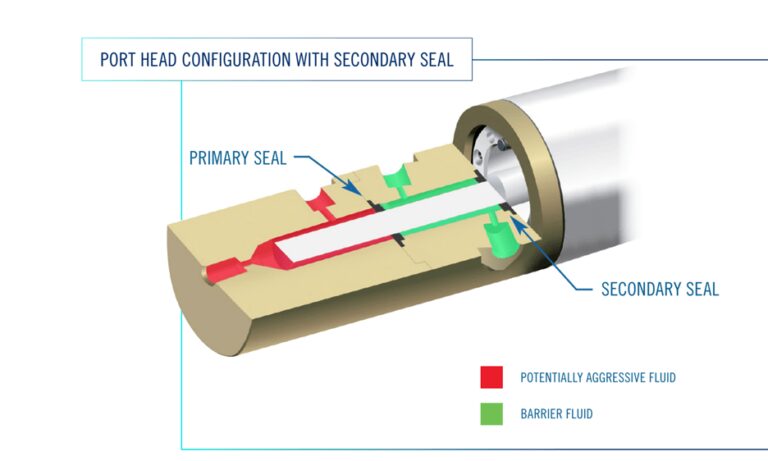
Diagram of The Lee Company Dual Seal Variable Volume Pump
Ensuring the pump’s wetted materials are chemically compatible with the fluids handled is critical. Otherwise, the fluids could corrode or contaminate the internal pump components over time.
Pumps are available in inert materials like PTFE, stainless steel, ceramics, and specialized alloys to accommodate aggressive acids, bases, solvents, or salts. Proper material selection prevents pump failures or cross-contamination issues.
3. Flow Rate and Pressure Range
The pump must be sized to match the application’s required flow rates and pressure range. Selecting a pump with flow or pressure ratings that are too low could starve the system. Conversely, choosing one with ratings far exceeding the application needs adds unnecessary costs. Work closely with the pump supplier to match the performance to your requirements.
4. Tubing and Valves
The tubing to connect the pump to the upstream and downstream components must be properly sized. Restrictive tubing can limit flow rates. Oversized tubing can create unswept volumes that impact accuracy. Similarly, valves must provide enough flow while also sealing effectively. Poor tubing or valve selection can undermine pump performance.
5. Internal Volume
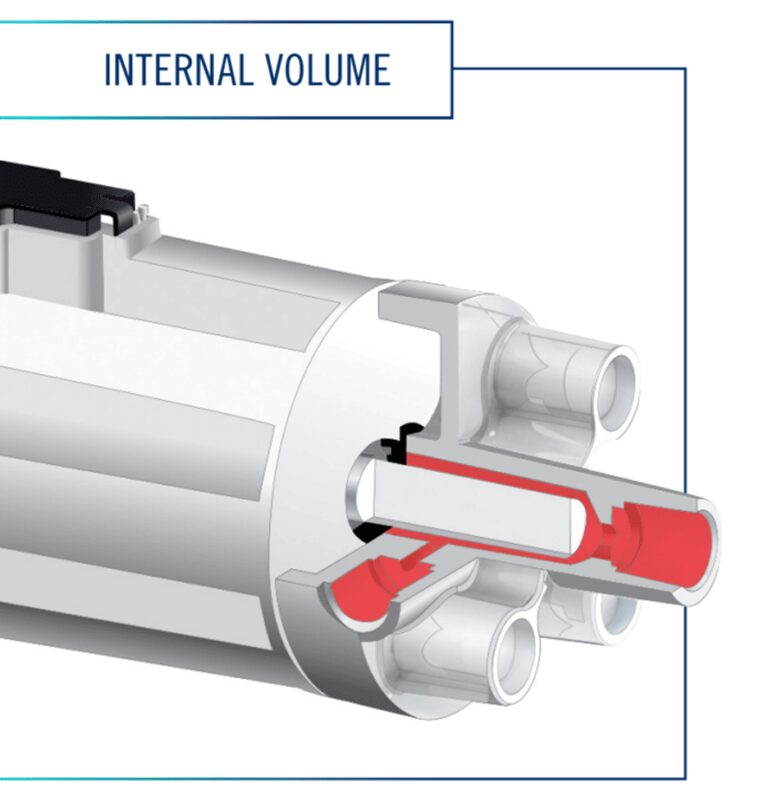
The internal volume of a pump’s port head in red.
A pump’s internal fluid-contacting volume affects priming needs, contamination risks, and accuracy. Larger internal volumes increase the amount of valuable reagents needed for priming. They also raise the risk of cross-contamination between fluids. Smaller volumes minimize these issues but reduce maximum flow rates. Balance these trade-offs carefully.
6. Size and Power
Pump size and power consumption are important considerations, especially for portable medical devices. More compact pumps take up less space. Low-power units generate less heat and simplify cooling needs. This enables smaller, more energy-efficient devices.
7. Maintenance Requirements
Frequent maintenance to replace seals, gaskets, or lubrication increases downtime. Maintenance-free pumps improve uptime and lower the overall cost of ownership. Consider long-life, low-maintenance pumps whenever possible.
Common Fluid Circuits
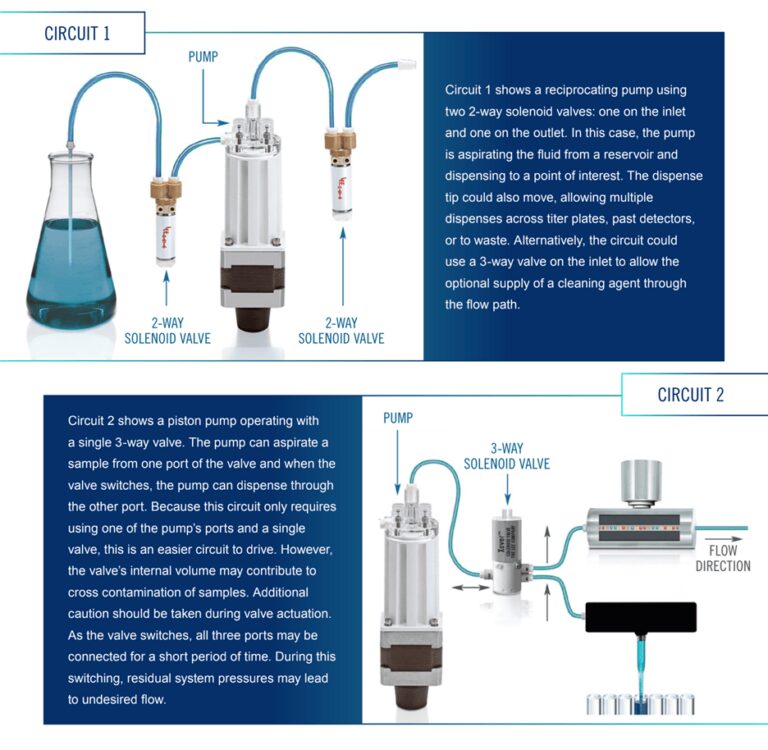
While medical devices contain elaborate and sophisticated fluid circuits, they are often represented in the basic schematics below.
Thoroughly evaluating these key pump selection factors will lead to the optimal choice for your unique medical needs. Partnering with an expert pump supplier simplifies the process.
About Lee Company
A family-owned and operated company since 1948, The Lee Company continues to carry out our founder’s vision of providing innovative solutions to some of industry’s toughest problems. Mr. Lee wouldn’t have it any other way. His unwavering commitment to superior quality and high performance has inspired team members to continue innovating and improving.
The Lee Company is a world leader in miniature precision fluid control products for industries like aerospace and defense, automotive, diagnostics, industrial and off-highway, medical equipment, scientific instruments, motorsports, oil and gas, power generation, and many others— providing engineered solutions for some of the world’s largest and most innovative companies.