
The growing demand for hydrogen: сurrent trends, sectoral analysis, and future projections
Hydrogen has emerged as a pivotal energy carrier in the global transition toward sustainable energy systems. This study analyses current trends, sectoral dynamics, and future demand projections for hydrogen, employing a multi-methodological framework that integrates Compound Annual Growth Rate (CAGR) extrapolation, scenario-based modeling, and regional comparative analysis. By leveraging historical growth patterns of geothermal, bioenergy, and wind energy sectors in the European Union (EU), three hydrogen demand scenarios—Conservative (3.25 % CAGR), Moderate (8.33 % CAGR), and Optimistic (15.42 % CAGR)—are projected to 2050. Results indicate that global hydrogen demand could range from 18.8 to 381.3 million tonnes per year by 2050, depending on technological advancements, policy frameworks, and infrastructure investments. The transportation and industrial sectors are identified as critical drivers, while regional disparities highlight leadership from the EU, the U.S., and Asia-Pacific nations. The study underscores the necessity of coordinated policy, cost reduction in green hydrogen production, and infrastructure scalability to realize hydrogen's potential in decarbonizing energy systems.
Keywords
1. Introduction
Hydrogen has been acknowledged as an adaptable energy carrier with the capacity to transform the global energy paradigm. Traditionally, hydrogen has been employed in several industrial applications, including the synthesis of ammonia and petroleum refining. Its significance as a clean energy alternative has escalated in recent years, propelled by the pressing necessity to shift towards sustainable energy frameworks. In contrast to fossil fuels, hydrogen emits solely water upon combustion, rendering it a compelling option for the mitigation of greenhouse gas emissions and the addressing of climate change.
Hydrogen plays an increasing role in the global energy transition. As of 2024, the hydrogen energy storage market is expected to reach $16.64 billion, with projections suggesting it could exceed $20 billion by 2028 [1]. This growth was spurred by increased research and development in hydrogen energy. Over the past five years, more than 30 nations have published hydrogen roadmaps, the industry has declared over 200 hydrogen projects and substantial investment commitments, and governments globally have pledged more than USD 70 billion in public support. Should all projects materialise, overall investments in hydrogen would surpass USD 300 billion by 2030, representing 1.4 % of global energy expenditure [2,3].
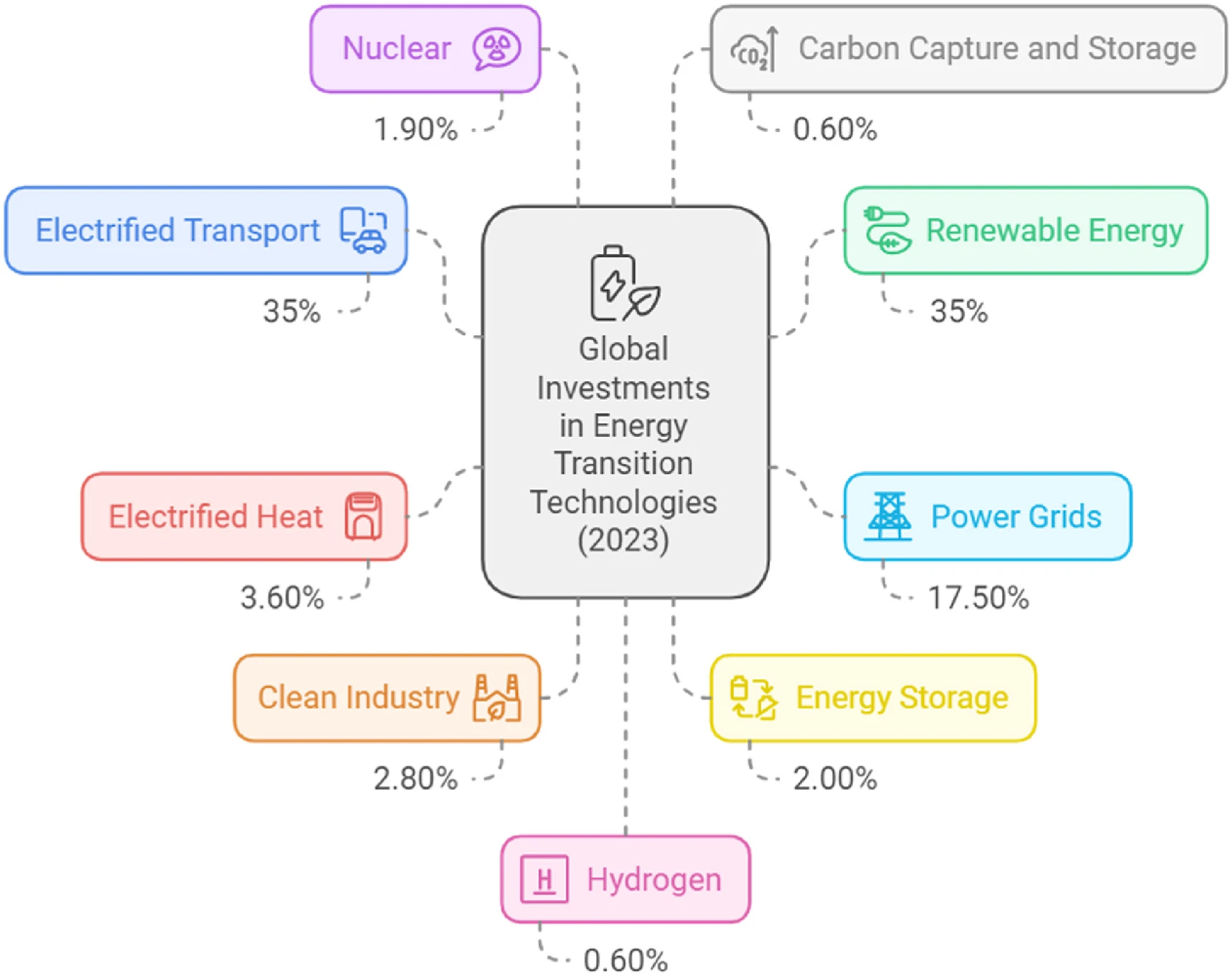
The incremental rise demonstrates a growing interest and investment in this sector, likely driven by increasing awareness of the benefits of hydrogen energy storage and its potential applications in the transition towards more sustainable energy systems. While hydrogen investments accounted for only 0.6 % of total energy transition investments in 2023, this represents a six-fold increase from 2022 [4].
The evolution of hydrogen technologies has been marked by significant advancements in production, storage, and distribution methods. Today, hydrogen is classified based on its production processes: gray hydrogen (derived from natural gas without carbon capture), blue hydrogen (produced similarly but with carbon capture and storage), and green hydrogen (generated through electrolysis powered by renewable energy sources) (Fig. 1). Among these, green hydrogen is gaining the most attention due to its minimal environmental impact, aligning closely with global sustainability goals. Green hydrogen production capacity is expanding rapidly, with companies like Green Hydrogen International leading the way with a project pipeline of 87.4 million tons of capacity as of Q1 2024 [5]. The growing interest in hydrogen is driven by its potential to reduce dependence on fossil fuels and provide energy storage solutions.
As the hydrogen market continues to evolve, significant investments are being directed towards enhancing infrastructure and scaling production capabilities, particularly for green hydrogen. For instance, countries like Korea have developed comprehensive strategies to promote the growth of their hydrogen economies, which could lead to a substantial increase in demand—projected to reach approximately 130 million tons annually by 2060 [6]. In developing countries like Indonesia, the national government has also begun to raise the potential development of hydrogen energy to support the national energy transition for 2050, as mentioned in the Government Regulation 79/2014 regarding the National Energy Transition. This effort was also followed by several research and pilot projects supported by the national oil company, one of which is the Renewstable, a green hydrogen initiative located in Sumba Island that involves harnessing solar panels and wind turbines, with an installed capacity of 7–8 MW during the day generated from those renewables [7].
Additionally, as hydrogen fuel cell technologies advance, the transportation sector emerges as a central component of this energy transition, especially for heavy-duty vehicles, buses, and trains, thereby reducing dependency on traditional fossil fuels. This shift not only promises to decrease greenhouse gas emissions but also offers an opportunity for energy security through diversified energy sources, essential for addressing both environmental concerns and economic stability in the face of a fluctuating fossil fuel market.
As the hydrogen sector expands, it is crucial to address not only production and infrastructure but also the economic viability of hydrogen as a mainstream energy source. Recent analyses suggest that hydrogen may be used as fuel for almost any application where fossil fuels are used presently and would offer immediate benefits over conventional fuels if produced from renewable sources [8].
Furthermore, the development of an efficient supply chain and distribution network is essential to ensure that hydrogen can be delivered reliably and cost-effectively to consumers and industries alike. Countries like China are already leading the way by investing heavily in research and projects aimed at reducing production costs and enhancing storage technologies, thereby facilitating the transition towards a hydrogen-based economy [6,9,10].
The primary objective of this research is to quantify and project hydrogen demand across key sectors and regions through a scenario-based analytical framework. By integrating historical energy transition patterns, economic metrics, and technological feasibility, the study aims to provide actionable insights for policymakers and stakeholders to navigate the complexities of hydrogen adoption, infrastructure development, and market scalability.
1.1. Literature review
Analyzing hydrogen demand involves a variety of methodologies that integrate both qualitative and quantitative approaches. One prominent method is the use of system dynamics (SD), which models the complex interactions within the hydrogen demand system by simulating the structure and dynamic behavior of economic, social, and ecological systems. This approach is particularly useful for understanding the long-term behavior of hydrogen demand across multiple industries, considering factors such as macroeconomic growth, policy incentives, and technological advancements in hydrogen fuel cells [6].
Table 1. Key market factors of hydrogen as a fuel.
| Sector | Factor | Description | Source |
|---|---|---|---|
| Economic Viability | Price Sensitivity | The acceptable price for hydrogen is a critical determinant of its demand. Studies show that hydrogen demand in passenger transport is expected to rise by 2030 but may decline by 2045 due to the economic viability of electric alternatives. | [14] |
| Cost Competitiveness | Hydrogen's cost competitiveness is influenced by CO2 taxes and energy tax rates, which can make hydrogen a viable option in the transportation sector by 2025 | [15] | |
| Production Costs: | The cost of hydrogen production, particularly from renewable sources, is a significant factor. For instance, production costs in G20 countries are projected to range from 8.47/kg to 10.01/kg. |
[16] . |
|
| Environmental Benefits | Greenhouse Gas Emissions | Hydrogen offers a clean alternative to fossil fuels, significantly reducing GHG emissions in freight transport. | [17] |
| Sustainability: | The use of hydrogen in fuel cell vehicles (HFCVs) can help meet global climate goals by reducing long-term GHG emissions. | [18] | |
| Technological Advancements | Fuel Cell Technology: | The development of fuel cell electric vehicles (FCEVs) is crucial for hydrogen adoption. These vehicles are emerging as prominent zero-emission technologies. | [19] |
| Hydrogen Production Pathways | Advancements in hydrogen production, such as electrolysis and steam methane reforming with carbon capture, are essential for reducing carbon footprints. | [18] | |
| Infrastructure Development | Refueling Infrastructure | The establishment of hydrogen refueling stations is vital for meeting future demand, with significant investments required to scale up infrastructure. | [19] |
| Transportation Methods | Efficient hydrogen transportation methods, such as pipelines and tankers, are necessary to support widespread adoption. | [20] |
Source: compiled by the authors
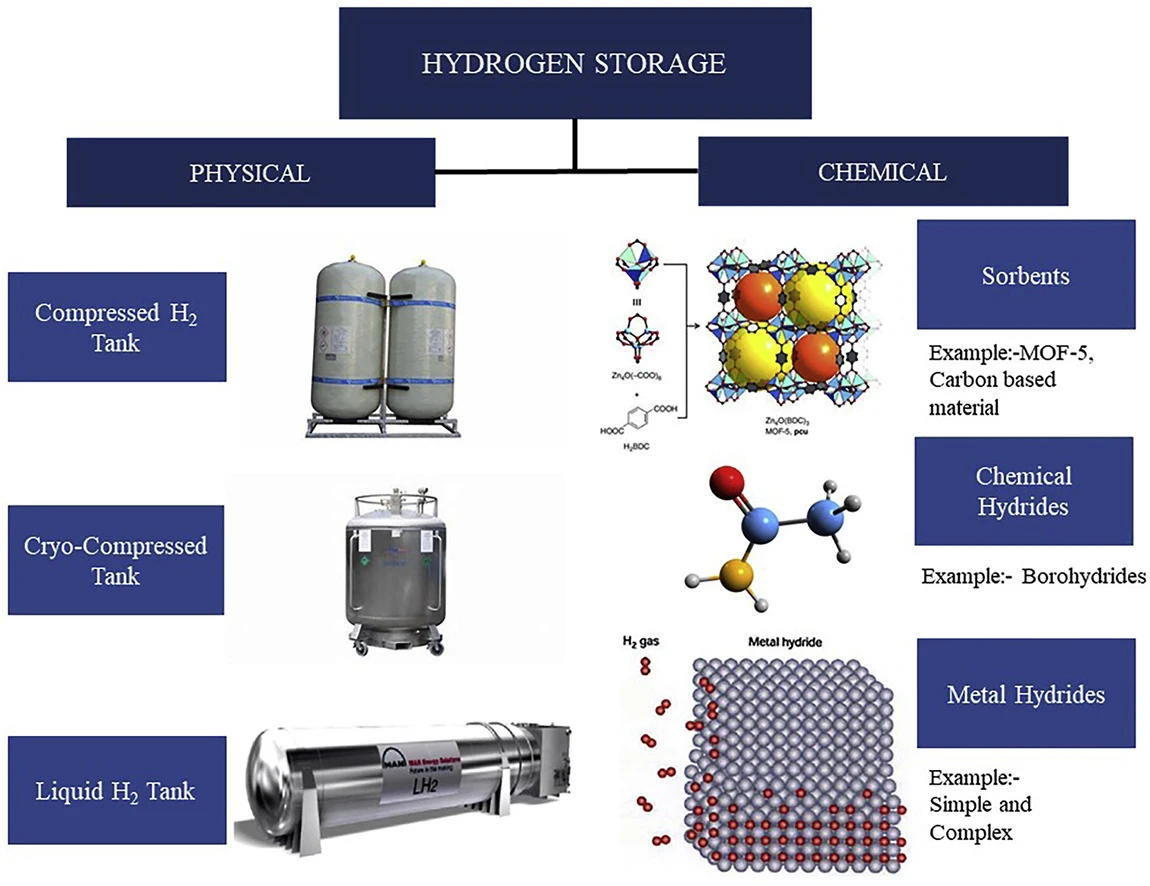
Hydrogen is promising for the future energy transition due to its ability to produce large amounts of energy with minimal environmental impact. It has a higher energy content per unit mass than natural gas or gasoline, making it an attractive fuel for transportation and industries [21]. However, hydrogen has a lower energy density per unit volume, requiring larger quantities to meet the same energy demands. This can be addressed by using larger pipelines and storage tanks or by compressing, liquefying, or converting hydrogen into higher-density fuels.
Table 2. Hydrogen-demand analytical methodologies.
| Methodology | Description | Source |
|---|---|---|
| Techno-Economic Modeling | Techno-economic modeling is used to estimate hydrogen demand by considering market penetration rates and production costs. For instance, a study on the transportation sector across 14 G20 nations used this method to project hydrogen demand and associated CO2 reductions under different scenarios, highlighting significant demand in countries like India and China. | [16] |
| Another study applied a similar approach to assess hydrogen demand in the mobility market, focusing on the cost-effectiveness of hydrogen production from natural gas with carbon capture and sequestration (SMR-CCS) | [22] | |
| Geospatial Modeling | Geospatial modeling integrates open-source data, including geodata and energy data, to estimate hydrogen demand in urban areas. This method helps identify demand hotspots and supports decision-making for hydrogen infrastructure development. | [23] |
| A specific application of this method in German cities validated its effectiveness by benchmarking against national studies, demonstrating its utility in urban planning. | ||
| Scenario-Based Analysis | Scenario-based analysis is employed to explore hydrogen demand under various price and policy conditions. For example, a study on Germany's hydrogen demand used multiple price pathways to assess demand elasticity, revealing significant demand in the industrial and energy conversion sectors even at high prices. | [24] |
| Another study focused on the aviation sector, projecting hydrogen demand based on traffic forecasts and aircraft fleet models, with a sensitivity analysis to account for different market entry scenarios. | [25] | |
| Network Analysis | Actor-network is applied to observe the process through which hydrogen energy was researched and examined, focusing on the reconstruction of past events, the actors' identification that influenced the knowledge development and relations in the development of hydrogen-led policy, and the understanding of the role of each of the actors in applying hydrogen energy for future sustainable energy transition | [26] |
| Data-Driven and Predictive Models | Data-driven models predict hydrogen demand by analyzing load characteristics and the impact of meteorological and economic factors. These models are used to forecast demand across sectors like transportation, industry, and energy storage. | [27] |
| Predictive models also assess the potential for hydrogen in specific markets, such as heavy-duty vehicles and hydraulic fracking, by evaluating technical, economic, and environmental aspects. | [28] | |
| Structural and Transferable Procedure Models | Structural models provide a framework for identifying industrial hydrogen demands by associating applications with calculation principles for quantifying location-based demands. This approach considers regional characteristics and varying implementation rates of hydrogen technologies. | [29] |
Source: compiled by the authors.
2. Methodology
3. Results
3.1. Hydrogen production trends and regional leadership
Hydrogen projects globally are mostly integrated by the International Energy Agency (IEA). By visualizing the IEA's data on hydrogen initiatives worldwide, distinct regional concentrations emerge, highlighting areas with significant numbers of such projects (Fig. 2). This spatial distribution underscores the varying degrees of commitment and advancement across different regions.
3.2. Sectoral and regional hydrogen demand projections
To construct three hydrogen energy development scenarios, geothermal energy, bioenergy, and wind energy were selected based on their compound annual growth rates (CAGR) in the EU, calculated using IRENA data (Table 3) [41]. Each source reflects unique opportunities and constraints, enabling the extrapolation of their dynamics to regional and sectoral hydrogen demand projections.Table 3. Electricity statistics in EU by source of production.
| Electricity statistics in EU by source of production | |||
|---|---|---|---|
| Year | Geothermal energy (GWh) | Bioenergy (GWh) | Wind energy (GWh) |
| 2000 | 6108,00 | 35165,52 | 22264,29 |
| 2001 | 6063,00 | 37559,73 | 26751,78 |
| 2002 | 6193,97 | 43050,65 | 36422,36 |
| 2003 | 6839,97 | 50613,85 | 44850,68 |
| 2004 | 7006,95 | 61601,15 | 59759,36 |
| 2005 | 7055,67 | 71477,73 | 71551,58 |
| 2006 | 8246,92 | 80700,10 | 83635,10 |
| 2007 | 9351,08 | 89693,89 | 106151,62 |
| 2008 | 9769,23 | 99753,73 | 121619,25 |
| 2009 | 10099,36 | 109780,54 | 135195,17 |
| 2010 | 10067,73 | 125977,16 | 151106,80 |
| 2011 | 10648,43 | 134460,53 | 182761,36 |
| 2012 | 11029,88 | 149876,20 | 209258,16 |
| 2013 | 11271,29 | 159642,14 | 240526,46 |
| 2014 | 11541,77 | 169271,23 | 258132,62 |
| 2015 | 11616,64 | 181061,53 | 307629,27 |
| 2016 | 11800,16 | 183606,35 | 307642,68 |
| 2017 | 11884,64 | 188237,45 | 367188,74 |
| 2018 | 12664,83 | 193344,78 | 383634,51 |
| 2019 | 12743,94 | 200357,10 | 440781,59 |
| 2020 | 12677,86 | 206205,33 | 488988,83 |
| 2021 | 12340,02 | 215834,83 | 469133,85 |
| 2022 | 12343,89 | 204463,46 | 522443,19 |
| CAGR | 3,25 % | 8,33 % | 15,42 % |
Source [41].
The selection of geothermal energy, bioenergy, and wind energy as proxies to derive hydrogen demand growth rates (3.25 %, 8.33 %, and 15.42 % CAGR, respectively) is grounded in their technological maturity, sectoral relevance, and growth dynamics, which align with the anticipated challenges and opportunities for hydrogen adoption in the EU. This methodological approach leverages historical energy transition patterns to model hydrogen's trajectory, as analog-based scenarios are widely recognized in energy economics for their ability to contextualize uncertainties in emerging technologies. Geothermal energy is characterized by stable but limited growth potential. Its development requires high initial investments and long project implementation timelines, hindering scalability. This source was chosen for the conservative scenario as its growth mirrors the slow adoption of niche technologies reliant on localized conditions and weak regulatory support. Bioenergy growth is driven by regulatory frameworks and compatibility with existing infrastructure. The moderate CAGR reflects a balance between resource availability and the need for technological modernization, making bioenergy suitable for a gradual transition scenario. Wind energy exhibiting steady growth. Its development is associated with the gradual expansion of infrastructure and government subsidies, analogous to the processes in hydrogen energy under the optimistic scenario.The analysis of hydrogen demand outlines three potential market development scenarios: conservative, moderate, and optimistic. These scenarios reflect varying trajectories of hydrogen adoption, shaped by technological maturity, policy frameworks, and geographic resource distribution.3.2.1. Conservative scenario (3.25 % per year)
The Conservative Scenario reflects a cautious trajectory for hydrogen adoption, mirroring the historical growth patterns of geothermal energy. This scenario assumes gradual infrastructure development, limited policy incentives, and reliance on blue hydrogen (produced from natural gas with carbon capture) due to its compatibility with existing fossil fuel systems. By 2050, hydrogen consumption is projected to reach 18.8 million tonnes/year, driven by incremental investments in pilot projects and retrofitting natural gas grids. This aligns with current EU initiatives, such as Germany's 5 GW electrolyzer target by 2030, which emphasize risk mitigation over rapid scaling. However, challenges persist, including high storage costs (∼€5–6/kg for compressed hydrogen) and competition from electrification in sectors like transportation, where battery technologies dominate short-range applications [42].3.2.2. Moderate scenario (8.33 % per year)
The Moderate Scenario draws parallels to bioenergy's integration into the EU energy mix, emphasizing policy-driven growth and hybrid systems. Here, hydrogen demand rises to 68.8 million tonnes/year by 2050, supported by blending mandates (e.g., 2 % hydrogen in gas grids by 2030) and industrial decarbonization in steelmaking and chemicals. This scenario leverages bioenergy's historical reliance on existing infrastructure, such as retrofitted gas pipelines and ammonia production facilities, to distribute hydrogen efficiently [43]. A key enabler is carbon capture and utilization (CCU), which enhances the value of biogenic carbon for synthetic fuels—a strategy highlighted in studies where biomass exclusion increases system costs by 20 % under net-negative targets. Nevertheless, dependency on natural gas infrastructure introduces risks, including methane leakage and scalability limits for carbon capture technologies, which require high utilization rates to justify investments [44].3.2.3. Optimistic scenario (15.42 % per year)
The Optimistic Scenario, inspired by wind energy's high CAGR, projects an aggressive expansion of hydrogen demand, reaching approximately 381.30 million tonnes per year by 2050. This scenario assumes breakthrough technological advancements, comprehensive policy incentives, and widespread adoption of hydrogen across all major sectors. This aligns with visions of a hydrogen economy where hydrogen is a primary energy carrier, significantly displacing fossil fuels and enabling deep decarbonization [45]. The rapid scaling of renewable-powered electrolysis reduces hydrogen costs to €1.50–2.50/kg by 2030, making it competitive with fossil alternatives. However, challenges include material shortages and grid instability from variable renewable inputs, necessitating investments in sector coupling and energy storage [46,47].The data of the Hydrogen Observatory [48] was used to analyze the existing demand for hydrogen in the EU and make projections in the 3 scenarios mentioned above (Fig. 5).-
•Conservative Scenario (3.25 % CAGR): Projects hydrogen demand at 18.8 million tonnes per year by 2050, driven by gradual infrastructure development and reliance on blue hydrogen. Challenges include high storage costs and competition from electrification.
-
•Moderate Scenario (8.33 % CAGR): Forecasts demand at 68.8 million tonnes per year by 2050, supported by policy-driven growth, blending mandates, and industrial decarbonization. Key enablers include carbon capture, with risks tied to natural gas infrastructure dependency.
-
•Optimistic Scenario (15.42 % CAGR): Envisions demand reaching 381.3 million tonnes per year by 2050, fueled by technological breakthroughs and widespread adoption. Requires overcoming material shortages and grid instability through energy storage and sector coupling.
4. Discussion
Global hydrogen demand is projected to increase significantly in the coming decades. In 2021, worldwide demand stood at 94.3 million metric tons, and it is expected to nearly double to 179.9 million metric tons by 2030 [49]. It is mentioned that demand could reach over 500 million metric tons by 2070, with the transportation sector becoming the largest consumer at 158.2 million metric tons [50].Global hydrogen consumption is projected to experience significant growth from 2023 to 2050. In 2022, global hydrogen use reached 95 million tons (Mt), marking a nearly 3 % increase from the previous year, with strong growth in most regions except Europe. By 2030, the annual production of low-emission hydrogen could reach 38 Mt if all announced projects are realized [51]. Сlean hydrogen demand is expected to rise dramatically, with projections estimating consumption to reach between 125 and 585 Mt per annum (Mtpa) by 2050 [52]. Under the Continued Momentum scenario, global green hydrogen consumption alone is forecasted to increase to 179 Mtpa by 2050, up from less than 1 Mtpa today [53].This growth will be driven by various sectors, particularly fertilizer production and refining, which are anticipated to lead the uptake of blue and green hydrogen until 2030 [52]. Additionally, hydrogen is expected to play a more significant role in the energy mix, contributing to 14 % of total final energy consumption by 2050 [54].If scenarios are compared with global projections, it could be concluded that the conservative scenario (18.8 Mt by 2050) looks rather subdued compared to global estimates, and the moderate scenario (68.8 Mt by 2050) is more realistic and is in line with the lower end of global projections. The optimistic scenario (381.3 Mt by 2050) is in the upper range of the IEA and McKinsey global projections (125–585 Mt). These projections highlight the growing importance of hydrogen in future energy landscapes across various countries and sectors. Moreover, hydrogen's applicability extends beyond energy, influencing sectors such as manufacturing, power generation, and residential heating.The scenarios assume stable policy frameworks and exclude geopolitical risks. Additionally, the CAGR method does not account for abrupt cost reductions in electrolysis or competing technologies like battery storage.5. Conclusion
This study delineates the transformative potential of hydrogen in achieving global decarbonization goals, emphasizing its role across transportation, industry, and energy storage sectors. Scenario analyses reveal that hydrogen demand could escalate to 381.3 million tonnes annually under aggressive technological and policy support, though conservative estimates suggest slower adoption due to infrastructural and economic barriers. Regional leadership by the EU, the U.S., and Asia-Pacific nations underscores the importance of strategic investments and cross-border collaboration. Key challenges, including high production costs, storage inefficiencies, and dependency on fossil fuel infrastructure, necessitate targeted policy interventions and innovation in electrolysis technologies. The findings advocate for a balanced approach that prioritizes green hydrogen scalability, grid integration of renewables, and harmonized regulatory frameworks to accelerate the transition to a hydrogen-based economy. Future research should focus on addressing material shortages, optimizing supply chains, and enhancing public-private partnerships to mitigate risks and unlock hydrogen's full potential in the energy transition.CRediT authorship contribution statement
Konstantin Gomonov: Writing – original draft, Visualization, Supervision, Software, Methodology, Investigation, Funding acquisition, Formal analysis, Data curation, Conceptualization. Chrisna T. Permana: Writing – review & editing, Visualization, Software, Project administration, Formal analysis. Chanel Tri Handoko: Writing – review & editing, Validation, Supervision, Methodology.Declaration of competing interest
The authors declare that they have no known competing financial interests or personal relationships that could have appeared to influence the work reported in this paper.The author Chanel Tri Handoko is a Guest Editor for this journal and was not involved in the editorial review or the decision to publish this article.Acknowledgments
Acknowledgments
The study was supported by the Russian Science Foundation Grant No. 22-78-10089, https://rscf.ru/project/22-78-10089/
References
[1] Research and Markets, & Statista
Hydrogen energy storage market size worldwide in 2023, with a forecast until 2028 (in billions U.S. dollars) [Graph]
Stat (December 31, 2023)
Retrieved October 16, 2024, from
https://www.statista.com/statistics/1307043/global-hydrogen-energy-storage-market-value/
[2] A. Berezin, N. Gorodnova, B.S. Sergi, C.T. Handoko, C.T. Permana
Prospects for energy transition to hydrogen fuel: analysis of world experience and Russian practice
Int. J. Energy Econ. Pol., 13 (4) (2023), pp. 641-653, 10.32479/ijeep.14305
[3] I. Veza, M. Idris, I.M.R. Fattah
Circular economy, energy transition, and role of hydrogen
Mechanical Engineering for Society and Industry, 2 (2) (2022), pp. 54-56, 10.31603/mesi.7134
View in Scopus
[4] Statista Distribution of investments in the energy transition worldwide in 2023 by technology [Graph]
Stat (January 25, 2024)
Retrieved October 16, 2024, from
https://www.statista.com/statistics/1411962/global-investment-in-energy-transition-breakdown-by-type/
[5] GlobalData Net Capacity for Green Hydrogen in the Pipeline Worldwide in Q1 2024 by Leading Company (In 1,000 Tons Per Annum) [Graph] Statista (July 9, 2024) Retrieved October 16, 2024, from
https://www.statista.com/statistics/1374638/global-net-capacity-for-green-hydrogen-by-leading-company/
[6] Huang, J., Li, W., Wu, X., Zhao, X., Zuo, X., Guo, Y., & Kang, K. (n.d.).Forecasting the Hydrogen Demand in China A System Dynamics Approach.
[7] PT. Pertamina Hulu Energy (PHE) Annual Profile Energy Transition Pilot Project in Indonesia Pertamina, Jakarta (2002)
[8] S. Singh, S. Jain, P.S. Venkateswaran, A.K. Tiwari, M.R. Nouni, J.K. Pandey, S. Goel Hydrogen: a sustainable fuel for future of the transport sector Renew. Sustain. Energy Rev. (2015), 10.1016/J.RSER.2015.06.040
[9] Lucchese, P., Mougin, J., Lullo, A., Di, A., Pisano, A., Meneses, C., Micheli, M., Triki, A., Rousseau, X., & Satyapal, S. (n.d.).Global Hydrogen Review 2024.
[10] S. Ratner, V. Iosifov Eco-management and eco-standardization in Russia: the perspectives and barriers for development
J. Environmental Management and Tourism, 1 (17) (2017), pp. 247-258, 10.14505/jemt.v8.117.23 Volume VIII, Spring
[11] Karimi, M., Doostkouei, S., Naysary, B., & Mousavi, H. (n.d.).Estimating Hydrogen Demand Function A Structural Time Series Model.
[12] V.M. Matyushok, A.V. Sinelnikova, S.B. Matyushok, D.P.C. Galvez Carbon capture and storage in hydrogen production: World experience and growth of export opportunities of the Russian hydrogen sector Int. J. Energy Econ. Policy, 14 (1) (2024), pp. 507-516 https://doi.org/10.32479/ijeep.15205
[13] S. Baufumé, F. Grüger, T. Grube, D. Krieg, J. Linssen, M. Weber, J. Hake, D. Stolten GIS-based scenario calculations for a nationwide German hydrogen pipeline infrastructure Int. J. Hydrogen Energy, 38 (10) (2013), pp. 3813-3829 https://doi.org/10.1016/j.ijhydene.2012.12.147
[14] L. Zheng, J. Eckstein, B. Weißenburger, L. Zheng, B. Weißenburger
Investigating the hydrogen demand curve in road transport
https://doi.org/10.1109/eem60825.2024.10608975 (2024)
[15] S. Cerniauskas, T. Grube, A. Praktiknjo, D. Stolten, M. Robinius
Future hydrogen markets for transportation and industry: the impact of CO2 taxes
Energies (2019), 10.3390/EN12244707
[16] Z. Zulfhazli, A.R. Keeley, T. Coulibaly, S. Managi
Analysis of prospective demand for hydrogen in the road transportation sector: evidence from 14 countries
Int. J. Hydrogen Energy (2024), 10.1016/j.ijhydene.2023.12.246
[17] V. Shardeo, B.D. Sarkar Adoption of hydrogen‐fueled freight transportation: a strategy toward sustainability
Bus. Strat. Environ. (2023), 10.1002/bse.3482
[18] M.D. Üçok Prospects for hydrogen fuel cell vehicles to decarbonize road transport
Discover Sustainability (2023), 10.1007/s43621-023-00159-1
[19] V. Vijayakumar, A. Jenn, L. Fulton Low carbon scenario analysis of a hydrogen-based energy transition for on-road transportation in California Energies (2021), 10.3390/EN14217163
[20] Y. Elaouzy, A.E. Fadar Water-energy-carbon-cost nexus in hydrogen production, storage, transportation and utilization
Int. J. Hydrogen Energy (2024), 10.1016/j.ijhydene.2023.12.114
[21] A. Saeedmanesh, M.A. Mac Kinnon, J. Brouwer
Hydrogen is essential for sustainability
Curr. Opin. Electrochem., 12 (January 2020) (2018), pp. 166-181, 10.1016/j.coelec.2018.11.009
[22] E.R. Okoroafor, J. Bracci, N.L. Boness, S.D. Saltzer, G. Shrimali, E.M. Hennessy, T.W. Kim, D.B. Seamon, S.M. Benson, M.D. Zoback, A.R. Kovscek A methodology for fueling mobility markets with hydrogen from natural gas plus carbon capture and sequestration Int. J. Greenh. Gas Control (2024), 10.1016/j.ijggc.2024.104095
[23] S. Beck, D. Fischer A methodological framework for geospatial modelling of hydrogen demand in cities Energy Informatics (2023), 10.1186/s42162-023-00291-2
[24] B. Weißenburger, M. Wietschel, B. Lux, M. Rehfeldt
The long term price elastic demand of hydrogen – a multi-model analysis for Germany Energy Strategy Rev. (2024), 10.1016/j.esr.2024.101432
[25] W. Grimme, M. Braun Estimation of potential hydrogen demand and CO2 mitigation in global passenger air transport by the year 2050 Transp. Res. Procedia (2022), 10.1016/j.trpro.2022.11.004
[26] H.L. Masuda, J.A. Castañeda-Ayarza Actor-network theory as a method for evaluating the energy sectors
Indepen. J. Manag. Prod., 12 (5) (2021), pp. 1213-1231, 10.14807/ijmp.v12i5.1343
[27] M. Bo, M. Zhao, L. Chao, N. Han A method for predicting hydrogen energy demand and supply based on the “dual carbon” policy https://doi.org/10.1109/iciea58696.2023.10241893 (2023)
[28] S. Razm, N. Lin Hydrogen demand potential and economics for heavy-duty vehicles and fracking: sustainable development Int. J. Hydrogen Energy (2024), 10.1016/j.ijhydene.2023.11.274
[29] S. Kiemel, R. Miehe, S. Glöser-Chahoud, A. Sauer Proposed method for identifying industrial hydrogen demands – structural basics of a transferable procedure model J. Clean. Prod. (2024), 10.1016/j.jclepro.2024.142299
[30] Jiabin Chen, Shaobo Wen Implications of energy intensity ratio for carbon dioxide emissions in China Sustainability, 12 (2020), p. 6925, 10.3390/su12176925
[31] IEA Hydrogen infrastructure database Retrieved January 16, 2024, from https://www.iea.org/reports/hydrogen-projects-database (2024)
[32] FCHEA Forecast Hydrogen Demand in the United States in 2050, by End Use and Scenario∗ (In Million Metric Tons Per Year) [Graph] Statista (October 13, 2020) Retrieved October 16, 2024, from https://www.statista.com/statistics/1179243/us-hydrogen-demand-forecast/
[33] Hydrogen Production Volume Retrieved October 16, 2025, from Statistic: Production Volume of Hydrogen in Russia from 2018 to 2022 (In Million Cubic Meters).
[34] Hydrogen Production Implementation Retrieved October 16, 2024, from Statistic: Share of Companies Implementing Hydrogen Production Projects in Russia in 2021, by Status.
[35] Gas Infrastructure Europe Forecast Need for Hydrogen Storage in Europe in 2030, by Country (In Terawatt Hours) [Graph]
Statista (June 14, 2021) Retrieved October 16, 2024, from https://www.statista.com/statistics/1336045/forecast-hydrogen-storage-demand-europe-by-country/
[36] Jingzhi Huang, Danni Lu, Xianan Huang, Zhenda Hu, Lin Liu, Changzhui Lin, Rui Jing, Chunping Xie, Nigel Brandon, Xuyue Zheng, Yingru Zhao Is China ready for a hydrogen economy? Feasibility analysis of hydrogen energy in the Chinese transportation sector Renew. Energy, 223 (2024), Article 119964, 10.1016/j.renene.2024.119964 ISSN 0960-1481
View PDF
View articleView in Scopus
[37] Raghu Raman, Vinith Kumar Nair, Veda Prakash, Anand Patwardhan, Prema Nedungadi
Green-hydrogen research: what have we achieved, and where are we going? Bibliometrics analysis
Energy Rep. (2022), 10.1016/j.egyr.2022.07.058
[38] S. Ratner, M. Zaretskaya Forecasting the ecology effects of electric cars deployment in Krasnodar region (Russia): learning curves approach
Journal of Environmental Management and Tourism, 1 (25) (2018), pp. 82-94, 10.14505/jemt.v9.1(25).11(Volume IX, Spring)
[39] Anissa Nurdiawati, Frauke Urban Decarbonising the refinery sector: a socio-technical analysis of advanced biofuels, green hydrogen and carbon capture and storage developments in Sweden Energy Res. Social Sci. (2021), 10.1016/j.erss.2021.102358
[40] Matthew Davis, Ayodeji Okunlola, Giovanni Di Lullo, Temitayo Giwa, Amit Kumar Greenhouse gas reduction potential and cost-effectiveness of economy-wide hydrogen-natural gas blending for energy end uses Renew. Sustain. Energy Rev. (2022), 10.1016/j.rser.2022.112962
[41] IRENASTAT Online Data Query Tool, Retrieved January 16, 2025, from https://pxweb.irena.org/pxweb/en/IRENASTAT/IRENASTAT__Power%20Capacity%20and%20Generation/Region_ELECSTAT_2024_H2.px/.
[42] Hydrogen observatory datasets Retrieved January 16, 2025, from https://observatory.clean-hydrogen.europa.eu/tools-reports/scenarios-future-hydrogen-demand.
[43] M. Millinger, F. Hedenus, E. Zeyen, et al.
Biomass exclusion must be weighed against benefits of carbon supply in European energy system
Nat. Energy (2025), 10.1038/s41560-024-01685-6
[44] M. Millinger, F. Hedenus, E. Zeyen, et al. Diversity of biomass usage pathways to achieve emissions targets in the European energy system Nat. Energy (2025), 10.1038/s41560-024-01693-6
[45] Fueling the Future of Mobility Hydrogen and fuel cell solutions for transportation. Retrieved January 16, 2025, from https://www2.deloitte.com/content/dam/Deloitte/cn/Documents/finance/deloitte-cn-fueling-the-future-of-mobility-en-200101.pdf.
[46] K. Gomonov, M. Reshetnikova, S. Ratner Economic Analysis of recently announced Green Hydrogen Projects in Russia: a multiple case study Energies, 16 (10) (2023), p. 4023, 10.3390/en16104023
[47] S. Ratner, Y. Chepurko, L. Drobyshevskaya, A. Petrovskaya Management of energy enterprises: energy-efficiency approach in solar collectors industry: the case of Russia
Int. J. Energy Econ. Pol. (4) (2018), pp. 237-243 No.8
[48] Hydrogen observatory datasets Retrieved October 16, 2024, from https://observatory.clean-hydrogen.europa.eu/tools-reports/datasets.
[49] Energy Monitor Hydrogen Demand Worldwide from 2019 to 2021, with a Forecast for 2030 (In Million Metric Tons) [Graph] Statista (October 24, 2022) Retrieved October 16, 2024, from https://www.statista.com/statistics/1121206/global-hydrogen-demand/
[50] IEA Forecast Hydrogen Demand Worldwide in a Sustainable Development Scenario from 2019 to 2070, by Sector (In Million Metric Tons) [Graph] Statista (September 30, 2022) Retrieved October 16, 2024, from https://www.statista.com/statistics/760001/global-hydrogen-demand-by-sector-sustainable-scenario/
[51] Global hydrogen review Retrieved January 16, 2025, from https://www.iea.org/reports/global-hydrogen-review-2023/executive-summary (2023)
[52] Global Energy Perspective Hydrogen outlook (2023) from https://www.mckinsey.com/industries/oil-and-gas/our-insights/global-energy-perspective-2023-hydrogen-outlook, Accessed 16th Jan 2025
[53] Global energy perspective Retrieved January 16, 2025, from https://www.mckinsey.com/industries/energy-and-materials/our-insights/global-energy-perspective (2024)
[54] IRENA world energy transitions outlook Retrieved January 16, 2025, from https://www.irena.org/Digital-Report/World-Energy-Transitions-Outlook-2023 (2023)