
2016 the year that was: Science + Technology
2016 may have been gruelling for some, with the political shockwaves of Brexit and the election in the US of Donald Trump, not to mention a spate of celebrity deaths.
But it was a big year for those engaging the tools of empirical science to better understand the natural universe around us.
In fact, 2016 kicked off with one of the biggest discoveries of this century so far: the detection of gravitational waves by an international team of scientists, including several from Australia.
Fortuitously enough, this came almost precisely 100 years after Albert Einstein predicted such waves ought to exist, and is a testament to the power of the scientific method. Based on the observations of his day, along with the power of mathematics and his inspired imagination, Einstein was able to describe a phenomenon that it was impossible for him to test.
Yet the dogged persistence of scientists in the intervening century enabled them to build a detector with a sensitivity that boggles the mind: it could spot a wobble in the fabric of spacetime that was 10,000 times smaller than the width of a proton.
Yet, in light of this profound discovery, we still don’t teach Einstein’s theories in high school.
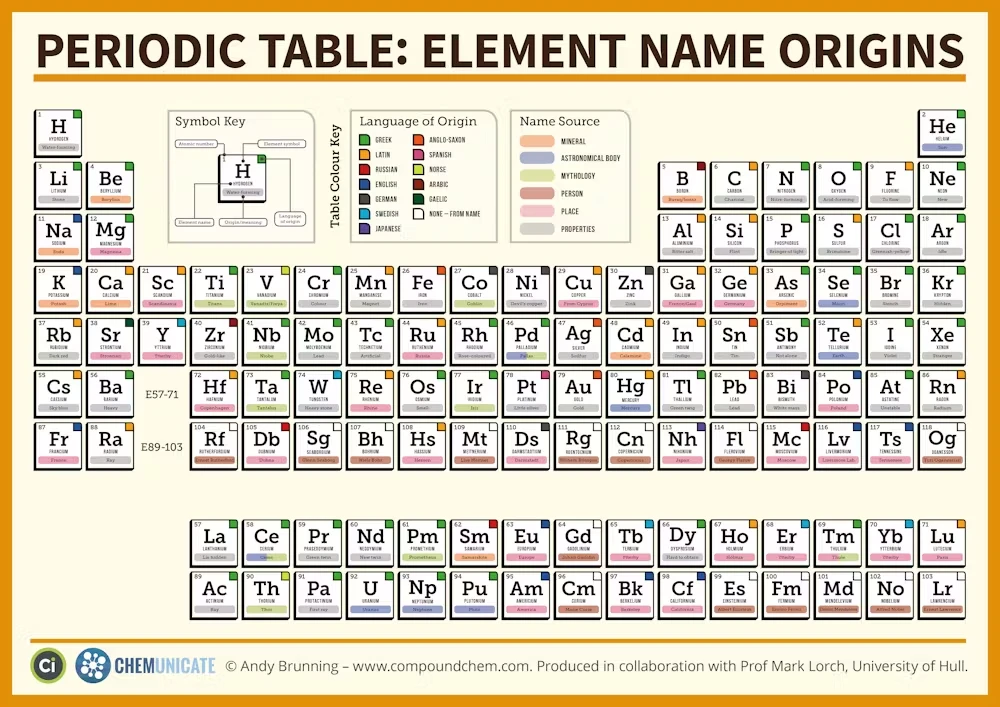
Speaking of the fundamental constituents of the universe, 2016 saw four new elements – 113, 115, 117 and 118 – added to the periodic table. Not that they only appeared this year; they’d been discovered as far back as 2003. But naming an element isn’t as easy as it used to be. We now call them nihonium (Nh); moscovium (Mc); tennessine (Ts) and oganesson (Og). The quest to find the end of the periodic table – and the end of matter – continues.
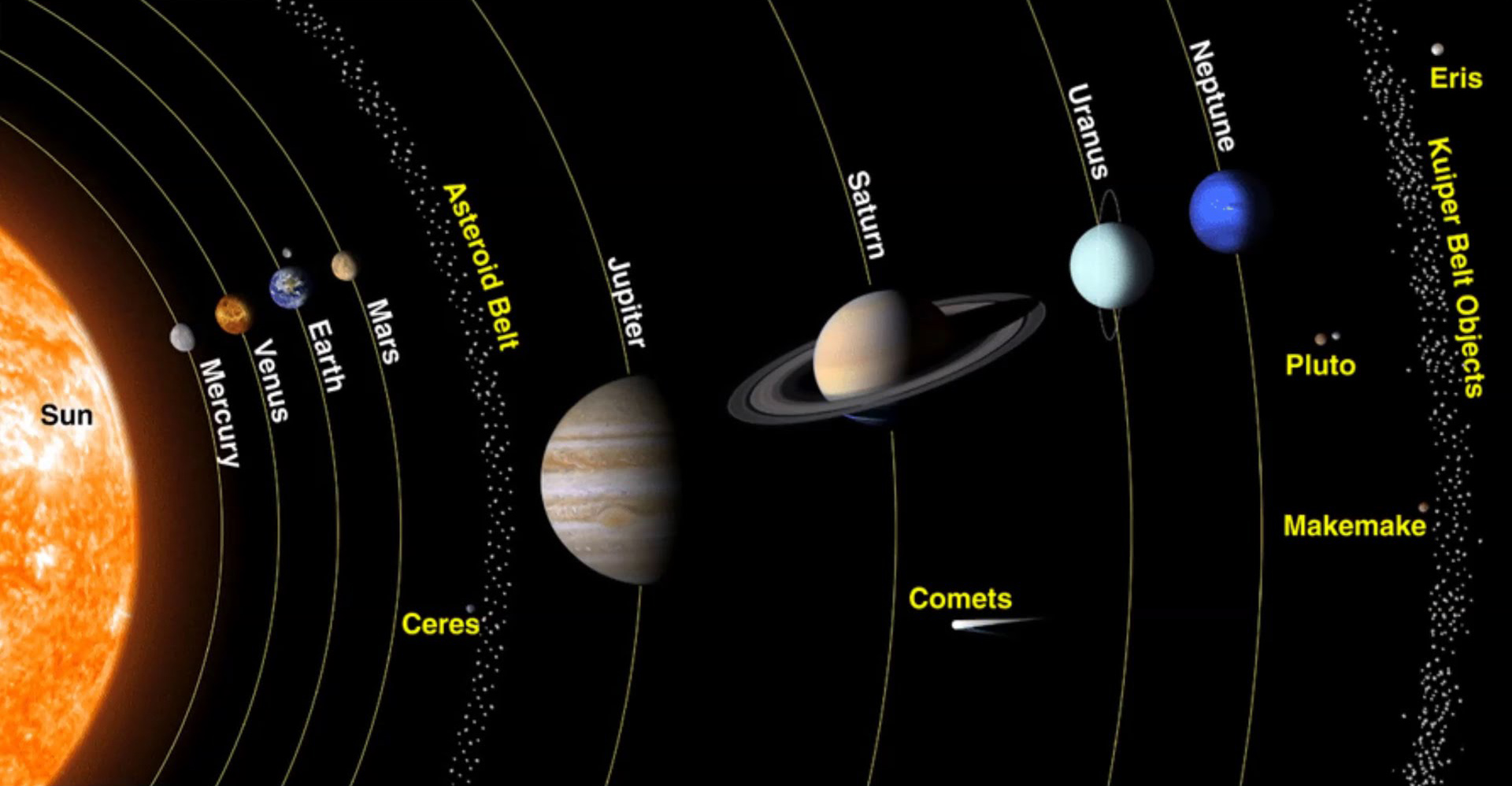
Turning our attention to the skies, NASA’s Juno probe made its way to the king of the planets in our Solar System: Jupiter. While it’s settling in, the astronomical community is eagerly awaiting what it can tell us about the gas giant.
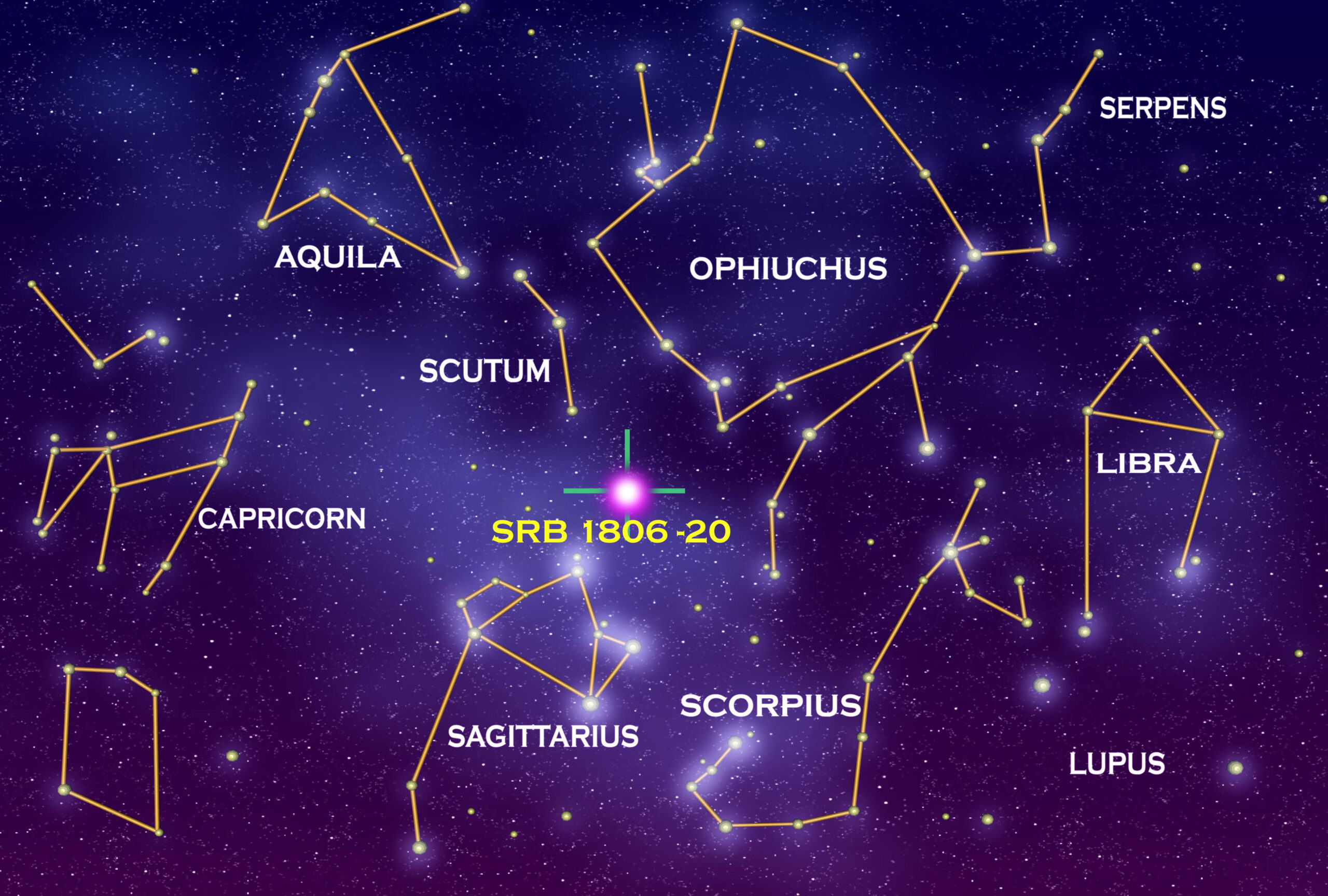
It was also a big year for those hunting for planets outside of our solar neighbourhood. In fact, it turns out there’s a wee planet (by galactic standards) around the closest star to our own Sun, Proxima Centauri b. While still 4.24 light years from Earth (only 40,113,000,000,000 km), it does bring travel to a planet in another star system into the plausible-enough-to-consider category.
Back here on Earth, automation, robotics and driverless cars were big topics in 2016.
The crash of a Tesla car while driving under its own control caused great controversy about the safety of self-driving cars. But this may just be an indicator the sector is in its infancy and needs careful regulation rather than an indictment against the concept of taking humans out of the driver’s seat.
This may come as little concession to those professional drivers and other workers who may lose their jobs to robots, an issue that we covered last year. In fact, Google’s AlphaGo showed that artificial intelligence now has an edge even in abstract games such as Go, once thought the preserve of human minds.
But this year there was a more positive angle on the coming robot invasion. While we may lose jobs, others will be created in their stead. And the great wealth that is generated through automation could eventually lead to free money for everyone.
Not that technology is always benign. Cybercrime continued to dominate the headlines in 2016. In April the federal government released its Cyber Security Strategy, although to mixed reception from experts in the field.
We also saw the alarming emergence of nefarious forces exploiting security holes in the Internet of Things devices to launch attacks against the very infrastructure of the internet.
And who can forget the fateful night in August when the Australian Bureau of Statistics’ Census servers were brought offline after a series of relatively minor distributed denial of service attacks.
But it wasn’t all bad news. Pokémon Go launched to become an overnight success/fad, although some of the shine of chasing virtual monsters has started to wear off.
And that just scratches the surface of science and technology in 2016. We’d like to thank all the wonderful academics who have taken their time to share their research and observations with us, and you the reader for engaging with and sharing their stories with the world.