
Niels Christensen perfected and patented the O-Ring
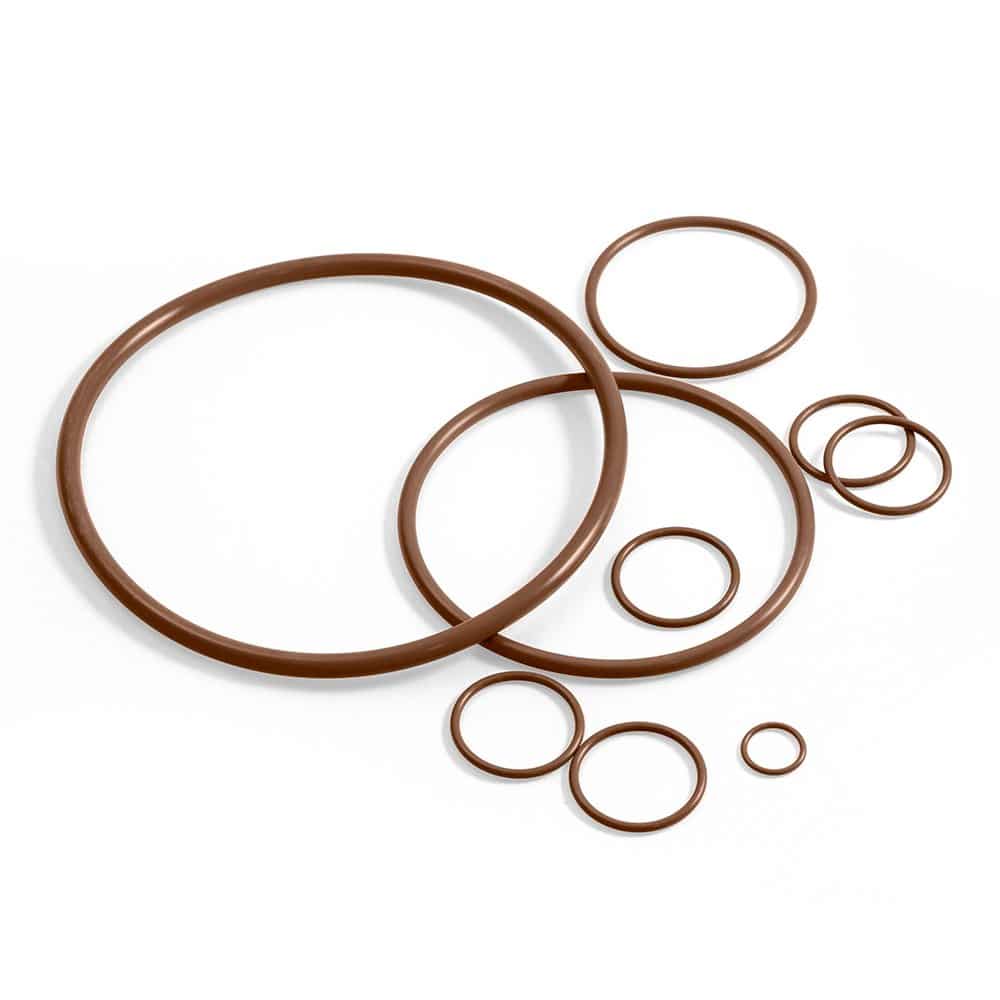
An o-ring is a solid rubber seal shaped like a doughnut or torus. When pressed between mating surfaces, an o-ring blocks the passage of liquids or gases.
最早的O形圈的发明及专利
Niels Christensen
Independent inventor, Niels Christensen perfected the o-ring while developing automobile brakes. Christensen received a patent for his improved o-ring in 1937, however, manufacturers were not interested until the aircraft boom of World War II. Then Christensen was able to sell his o-rings to the military after tests on a Northrop plane. The simple o-ring enabled a complex technology to advance.
Background O-Rings
Early uses of round, resilient rings for dynamic applications were in long grooves or as seals in between sliding telescope tubes or on pistons where the rings were not confined, allowing them to slide back and forth. These were not effective. Large cross-section india rubber rings were used as gaskets in counter-bores for water-works piping in the mid 19th Century. Thomas Edison's 1882 light bulb patent shows a round rubber ring at the neck of the glass bulb to keep the mercury in and the air out. There is a Swedish patent for an o-ring that is dated May 12,1896.
Dynamic O-Rings
Today's dynamic o-ring in a short rectangular groove was the result of experimental work in the early 1930's Niels Christensen. By the early 1940's, o-rings became the standard seal for the Air force hydraulic systems. This established the basic sizes and design information. In the 1950's, came acceptance for industrial hydraulics, farm equipment, passenger cars accessories, plumbing, appliances, pumps, valves, and many other devices. Today, billions of o-rings are sealing every conceivable apparatus all over the world, in the air, on land, and sea, and in outer space.
O-Rings the Seal of the Century
The o-ring is the most widely adapted seal in history because of its simplicity, low cost, ease of installation, and small space requirements without supporting structures. It is suitable for dynamic or static seals within the temperature limits of elastomeric materials, Successful use depends upon proper groove dimensions and selection of the right compound, or from one's prior experience with similar applications.