
Rubber Hose History
History of the rubber hoses is associated with the history of latex discovery and production over almost five centuries for several industrial uses, big and small. Now, the world produces more than 5 million tons of raw rubber as well as 8 million tons of artificial rubber. However, before the present period of mass production, the aboriginal people of the Americas, particularly in the Amazon, knew the use of rubber. Since then, the world witnessed the advent of multiple rubber hose manufacturers all around the world.
It was never realized that boots, balls, and handmade water-resistant buckets, the three useful items of rubber were created before the modern era. Subsequently, in the 18th century, Charles de la Condamine contributed to the scientific experimentation with natural raw materials of rubber. At about the same period Pierre Joseph Macquer followed the studies by Codamine and found that the material can be made into pipes.
An Insight Into the Advent of Rubber Hoses
However, rubber pipes were not extensively used in dousing the fire, in the automobile sector and the healthcare sector until the 19th and 20th centuries. In 1821 James Boyd of Boston, first got the license for fire hoses. The first rubber pipe measured almost 80 pounds but substituted the previously used leather hoses that were susceptible to splitting or even breaking under intense pressures. The creation of Boyd, produced with a rubber-lined net of cotton is a rudimentary process that still applies widely today.
Just 20 years down the line, B.F. Goodrich found how rubber can be vulcanized. He extended rubber as a safety layer and ship to resist severe conditions. In Brazil subsequently, the rubber sector flourished, with rubber trees mined from their crude latex. For coping with productivity, the rubber seeds were transported via London to Africa and South-East Asia, where wide-scale production started and continues even today.
A device was constructed in the ’50s by Robert Ely for the replenishment of fire hoses according to regional fire norm. The equipment known as the’ Fire Ely’ can replenish the coupler in 80 seconds without binding.
Polyester and Nylon webbing hoses were produced during the 1970s. These tubes did not damage as silk but had to be dehydrated to avoid mold. The rubber line deteriorates fast, so the rubber hoses were subject to water testing each year by the leading rubber hose manufacturers.
Jones Snap links were established in the late seventies and early eighties. About the same period, fittings from Storz also arrived. Most links for Jones Snap were replaced, although today the Storz accessories are still used. Modernized rubber hoses are produced of rubber filling and have a larger diameter. They are heavier in weight and can be repackaged humid without being rotted.
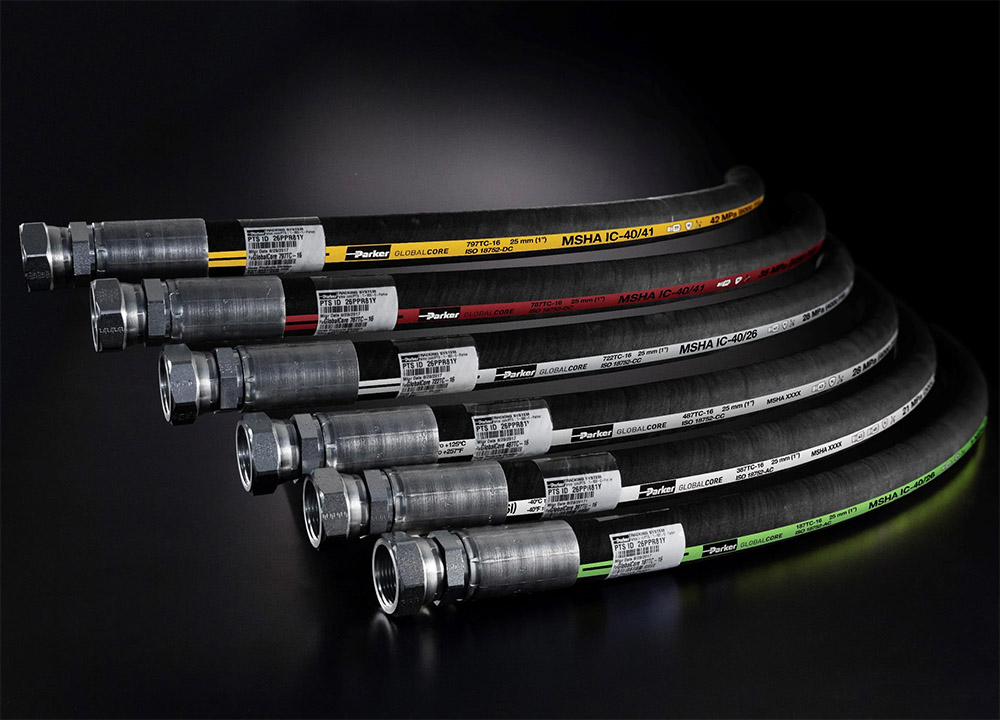
Like many other sectors, the conflict has led to broader use of raw materials. Latex tubes were applied in blood transmissions were generated in the WWI, whereas WWII rubber hoses were adopted by naval vessels for fueling. The large and tiny hydraulic installations from heavy equipment to dishwashers still use the rubber hose to transport pressure liquids and make rubber hoses omnipresent in a variety of machines. It would not be an exaggeration to state that it is among the most significant and dynamic components of the modern period.